

Search

Phone System FAQ
Campus walkway with banners

Microsoft Teams Phone Resource Page

Antelope Valley College is modernizing campus communications by transitioning from the current Mitel telephone system to the Microsoft Teams Phone System. This resource page provides faculty and staff with key project information, training details, support resources, and answers to common questions as the college prepares for the official go-live date on September 8, 2026.

Why AVC Is Moving to Microsoft Teams Phone

The Mitel phone system has supported the college for many years, but communications technology has evolved. Moving to Microsoft Teams Phone will help AVC reduce dependency on aging infrastructure while improving reliability, collaboration, and long-term sustainability.

  • Integration with Microsoft Teams and Microsoft 365 tools employees already use.
  • Ability to make and receive calls from computers, mobile devices, and supported desk phones.
  • Improved flexibility for hybrid and mobile work.
  • Enhanced voicemail, call history, call forwarding, and call management features.
  • Simplified collaboration through one communication platform for calls, chats, and meetings.
  • Increased reliability and a more sustainable long-term phone service model.

Need help with Microsoft Teams Phone?

If you need additional assistance, you can reach us by:

When submitting a ticket via email, please include "Teams Phone Assistance" in the subject line along with a brief description of your issue (e.g., your extension, building/room, and what you need help with). This helps us route your request to the right team quickly.

Also, see FAQs and on-demand training materials below.

Implementation Timeline

Microsoft Teams Phone Implementation Timeline
TimeframeMilestone
September 8, 2026Official go-live date for Microsoft Teams Phone.
After Go-LiveContinued support, assistance, and system optimization.

Training and Support

Training opportunities will be available throughout August to help employees become comfortable with the new phone system before go-live. Sessions will introduce the Teams Phone interface and demonstrate common tasks such as placing and receiving calls, managing voicemail, transferring calls, and adjusting call settings.

Recorded Training Videos

  1. How to Make and Receive Calls
  2. How to Merge Calls

Recent Live Training Session

Katherine Enna from Global CTI provides an overview of the new Microsoft Teams Phone system.

What Employees Can Do with Teams Phone

  • Make and receive work calls directly in Microsoft Teams.
  • Use call history and voicemail from within Teams.
  • Transfer calls, including consultative transfers when needed.
  • Set call forwarding and answering rules.
  • Manage voicemail greetings and access voicemail transcriptions where available.
  • Stay connected from a campus workstation, mobile device, or supported desk phone.

What to Expect

Over the coming weeks, Information Technology Services will share additional communications about training schedules, department migration activities, equipment information, and support options. Employees are encouraged to review these updates and attend training before the September 8 go-live date.

Frequently Asked Questions

This FAQ is designed to help faculty, staff, student workers, and department personnel understand and use Microsoft Teams Phone and the Yealink MP56 Teams handset.
The Microsoft Teams Phone System is scheduled to go live on September 8, 2026.

On the go-live date, AVC will officially retire the Mitel phone system and transition supported users and services to Microsoft Teams Phone.

Legacy Voicemails Will Not Transfer to Microsoft Teams
As part of the transition to Microsoft Teams Phone, voicemails stored in the current Mitel/ShoreTel system will not migrate to Teams. Users who wish to keep existing voicemail messages must save them before Sep. 3, 2026.
 
What You Need to Do
  1. Review your existing voicemails in the Mitel system.
  2. Identify any messages you need to retain.
    1. From Mitel Connect Client app on your computer.
      1. Go to your Voicemail tab and find the message you want to save (under All, Saved, or Deleted tabs).
      2. Right-click the message or click the More button in the toolbar.
      3. Select Download Voicemail as WAV file (or Save Voicemail / Export).
      4. Choose the destination folder on your computer and click Save.
    2. Alternative Methods
      1. Email Integration: If your system is configured to send voicemails to your email, open the email notification and download the attached .wav file directly.
  3. Complete this process before Sep. 3, 2026.
Important: Once the legacy phone system is retired, voicemails remaining in the old system will no longer be accessible.

General Teams Phone Questions

Microsoft Teams Phone is a cloud-based phone system that allows users to make and receive calls using the Teams application on a computer, mobile device, or certified Teams phone.

A softphone is the Microsoft Teams application running on your computer, laptop, or mobile device that functions as your telephone.

Yes and No - Phones need to be placed throughout the campus for security and safety reasons. Ask ITS first if you can remove your phone. DO NOT UNPLUG and put it in your desk drawer or cabinet. Some users like Adjunct Faculty only have the softphone features on their computer.

Yes. Teams Softphone works anywhere you have an internet connection.

Yes. You can be signed into Teams on your computer, mobile phone (optional), and desk phone simultaneously.

In most cases, your existing extension and direct phone number remain unchanged.

Calls and Voicemail

Select Calls in Teams and:

  • Dial a number
  • Search by name
  • Call from your contacts
  • Return a missed call

While on a call:

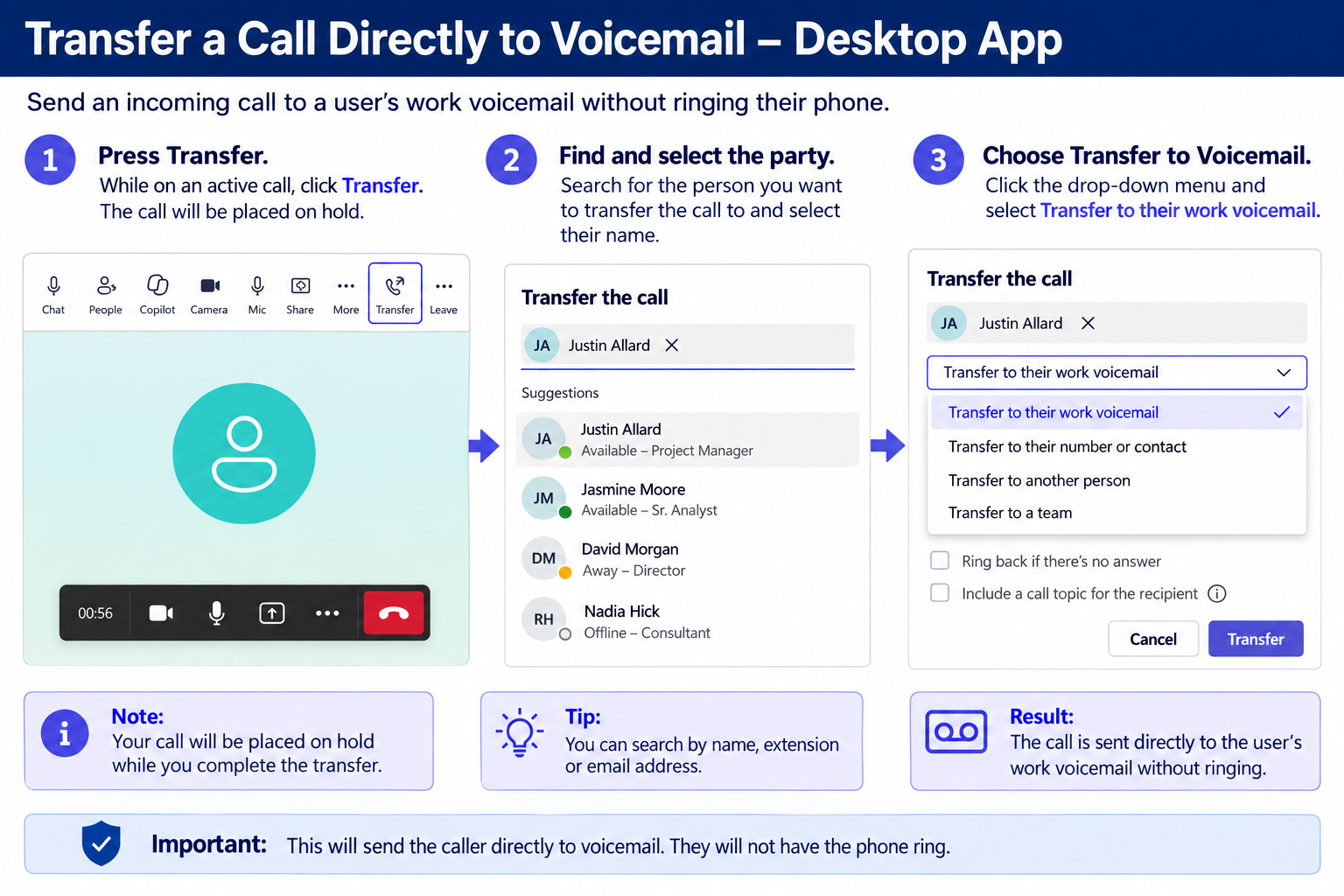
  1. Select Transfer.
  2. Search for the person.
  3. Choose Transfer Now or Consult Then Transfer.

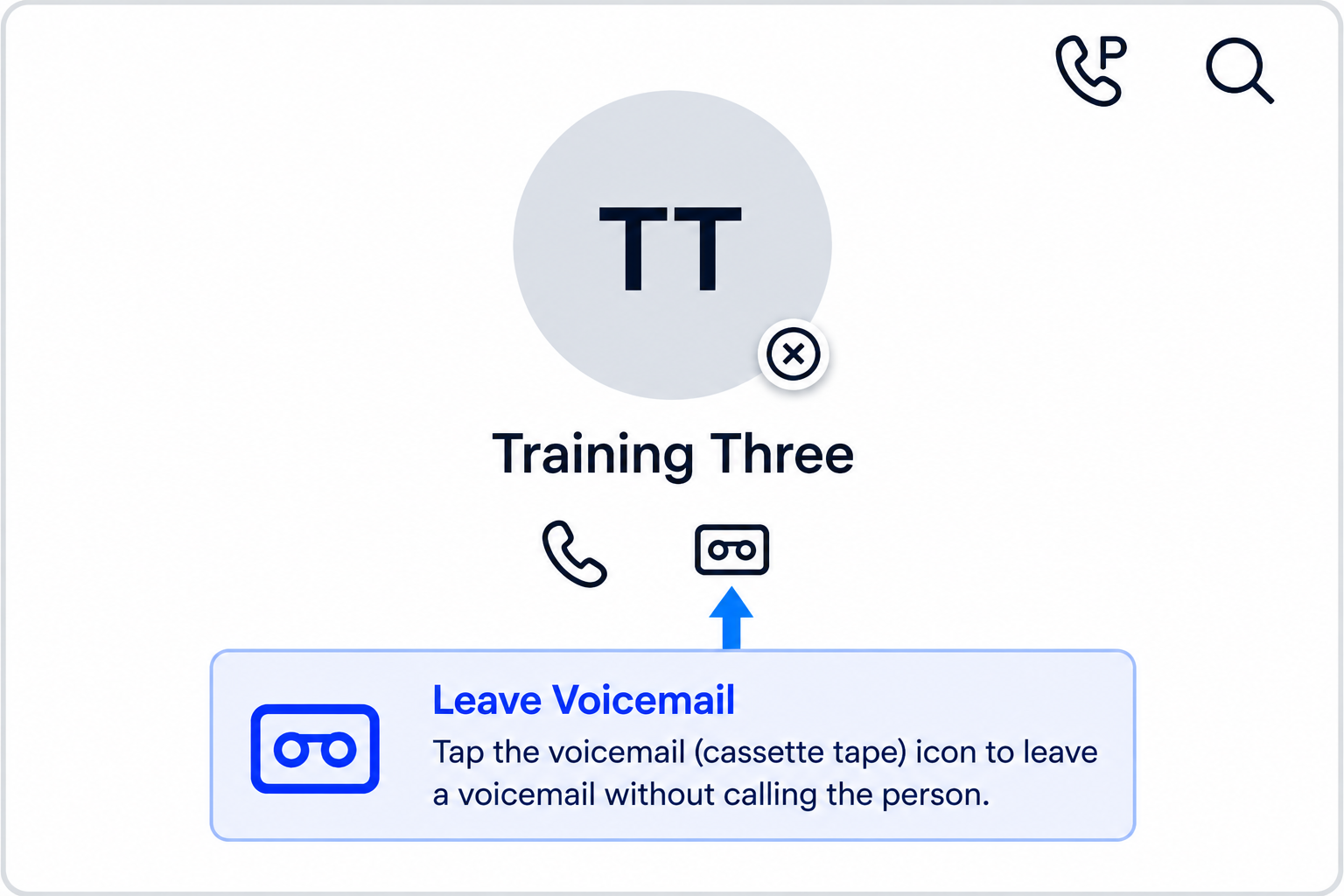
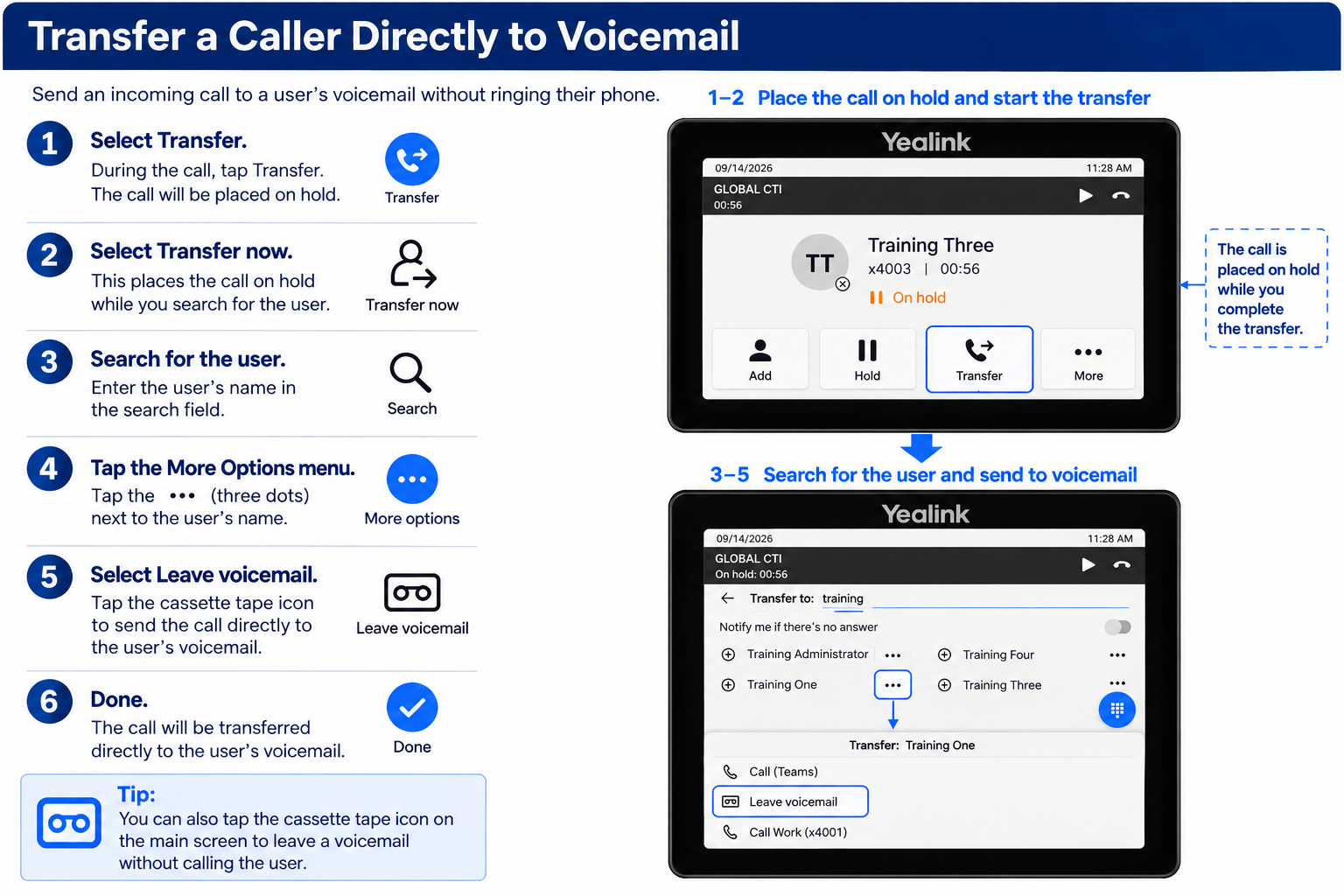
Depending on your organization's configuration, you may be able to select voicemail from the transfer options.

Select the Hold button during an active call. To Resume the call press "Resume"

Select Calls > Voicemail in Teams.

Yes. Voicemail messages can be played directly within Teams.

Teams automatically converts voicemail recordings into text when available.

Yes. Voicemail messages can be deleted within Teams.

Presence and Availability

  • Green = Available
  • Red = Busy
  • Red with black line = Do not disturb and/or Presenting (screen sharing during a call or meeting)
  • Yellow = Away
  • Gray = Offline

Yes. Teams updates your status based on meetings, calls, and activity.

Yes. Select your profile picture and choose a status.

Teams Softphone Frequently Asked Questions

A headset is recommended for best audio quality, but built-in laptop speakers and microphones can also be used.

Yes, but Bluetooth devices have limitations in range. Ideal wireless headsets use DECT technology.

A notification appears allowing you to:

  • Answer
  • Decline

Yes. Calls can ring multiple signed-in devices.

Yes, if your Teams Phone license and calling permissions allow it.

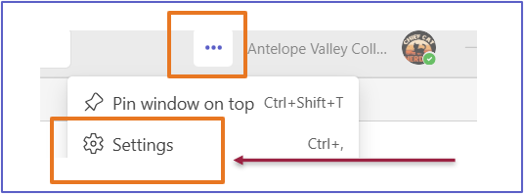
Go to settings.

Settings page


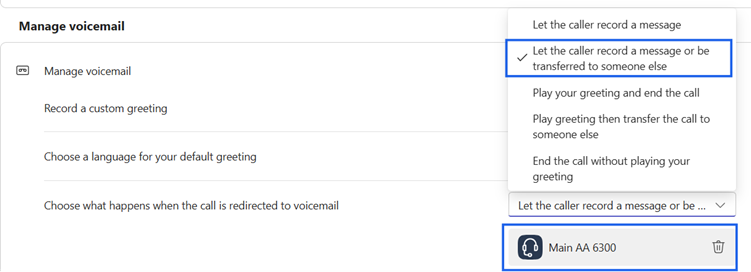
Find Calls on the settings list and find Manage Voicemail. Select the option below to allow callers to press 0 and enter the approved destination calls can be routed too.

List the caller record a message or be transferred to someone els

Select Settings > Devices within Teams.

  • Verify microphone settings
  • Check mute status
  • Confirm correct audio device selection
  • Restart Teams if needed
  • Verify internet connectivity
  • Use a wired connection when possible
  • Close unnecessary applications
  • Use a certified headset

Yealink MP56 Teams Phone FAQ

The Yealink MP56 is a Microsoft Teams-certified desk phone that provides calling features through the Teams platform.

No. The MP56 is simply another way to access your Teams Phone service. Some departments will use the handset to answer calls. Using both together where permitted is ideal to take advantage of other Teams services such as chat, and Teams Meetings.

MP56 Step-by-Step Instructions

  1. Power on the phone.
  2. Wait for the Microsoft Teams sign-in screen.
  3. A code will appear on the display.
  4. On your computer or mobile device, go to the Microsoft sign-in page provided on the phone screen.
  5. Enter the code displayed on the MP56.
  6. Sign in with your Microsoft 365 account.
  7. Approve any multifactor authentication prompts.
  8. The phone will complete setup automatically.
  1. Tap Calls.
  2. Select Dial Pad.
  3. Enter an extension or phone number.
  4. Tap the Call button.
  1. When the phone rings, tap Accept.
  2. To decline the call, tap Decline.
  3. If using a headset, use the headset answer button if supported.
  1. During an active call, tap More.
  2. Select Hold.
  3. To resume the call, tap Resume.
  1. During an active call, tap Transfer.
  2. Search for the person or department.
  3. Select the contact.
  4. Choose:
    • Transfer Now for an immediate transfer.
    • Consult First to speak with the recipient before transferring.
  5. Complete the transfer.
  1. Tap Calls.
  2. Select Voicemail.
  3. Choose the voicemail message.
  4. Tap Play.
  5. Review transcript text when available.
  1. Tap Calls.
  2. Review:
    • Missed calls
    • Received calls
    • Placed calls
  3. Select a record to return the call.
  1. Tap People.
  2. Search for a person by name.
  3. Select the contact.
  4. Tap the call button.
  1. Use the physical volume buttons on the side of the phone.
  2. Adjust volume while:
    • The phone is ringing
    • On an active call
    • Listening to voicemail
  1. Locate the desired contact.
  2. Open the contact card.
  3. Select Add to Favorites.
  4. Access favorite contacts quickly from the Teams phone interface.

Depending on your organization's configuration:

  • Line keys may display speed dials.
  • Line keys may display delegated lines (limited use).
  • Some line key assignments are managed centrally by IT.
  1. Select Restart if prompted.
  2. Allow the phone to reconnect to Teams.
  • Keep the phone connected to the network at all times.
  • Reboot the phone if features appear unresponsive.
  • Report recurring audio or sign-in issues to the Help Desk.

Yes. Most features are accessed through the touchscreen interface.

Yes. USB, Bluetooth, DECT (wireless) and wired headset options are supported depending on configuration.

Yes. Select Calls to review call history.

Line keys provide quick access to frequently used contacts, one-touch transfer, speed dials, or delegated lines depending on system configuration.

Yes, if enabled and configured by your organization.

Some organizations use shared device licensing and common area phone configurations.

  • Confirm volume is turned up
  • Check Teams presence status
  • Verify network connectivity
  • Reboot the phone if instructed
  • Contact IT if the issue continues

Call Queue and Auto Attendant Questions

A Call Queue distributes incoming calls to a group of users.

An Auto Attendant automatically answers calls and presents menu options to callers.

You may be assigned as a Call Queue agent.

Some organizations allow agents to opt in or out of queues.

Teams can ring all signed-in devices simultaneously

Common Troubleshooting

  • Teams is running
  • Audio devices are connected
  • Correct status is set
  • Do Not Disturb is disabled
  • Internet connection is working

Restart the device and contact IT support if the issue persists.

Check:

  • Presence status
  • Call forwarding settings
  • Do Not Disturb settings

Sign out and back into Teams or restart the application.

  • Use a certified headset for best audio quality.
  • Keep Teams updated.
  • Use Favorites for frequently called contacts.
  • Check your presence status before important calls.
  • Restart Teams or the MP56 if issues occur.
  • Report recurring issues to your Help Desk or IT team.

Need help with Microsoft Teams Phone?

If you need additional assistance, you can reach us by:

When submitting a ticket via email, please include "Teams Phone Assistance" in the subject line along with a brief description of your issue (e.g., your extension, building/room, and what you need help with). This helps us route your request to the right team quickly.

Also, see FAQs and on-demand training materials above.

;